
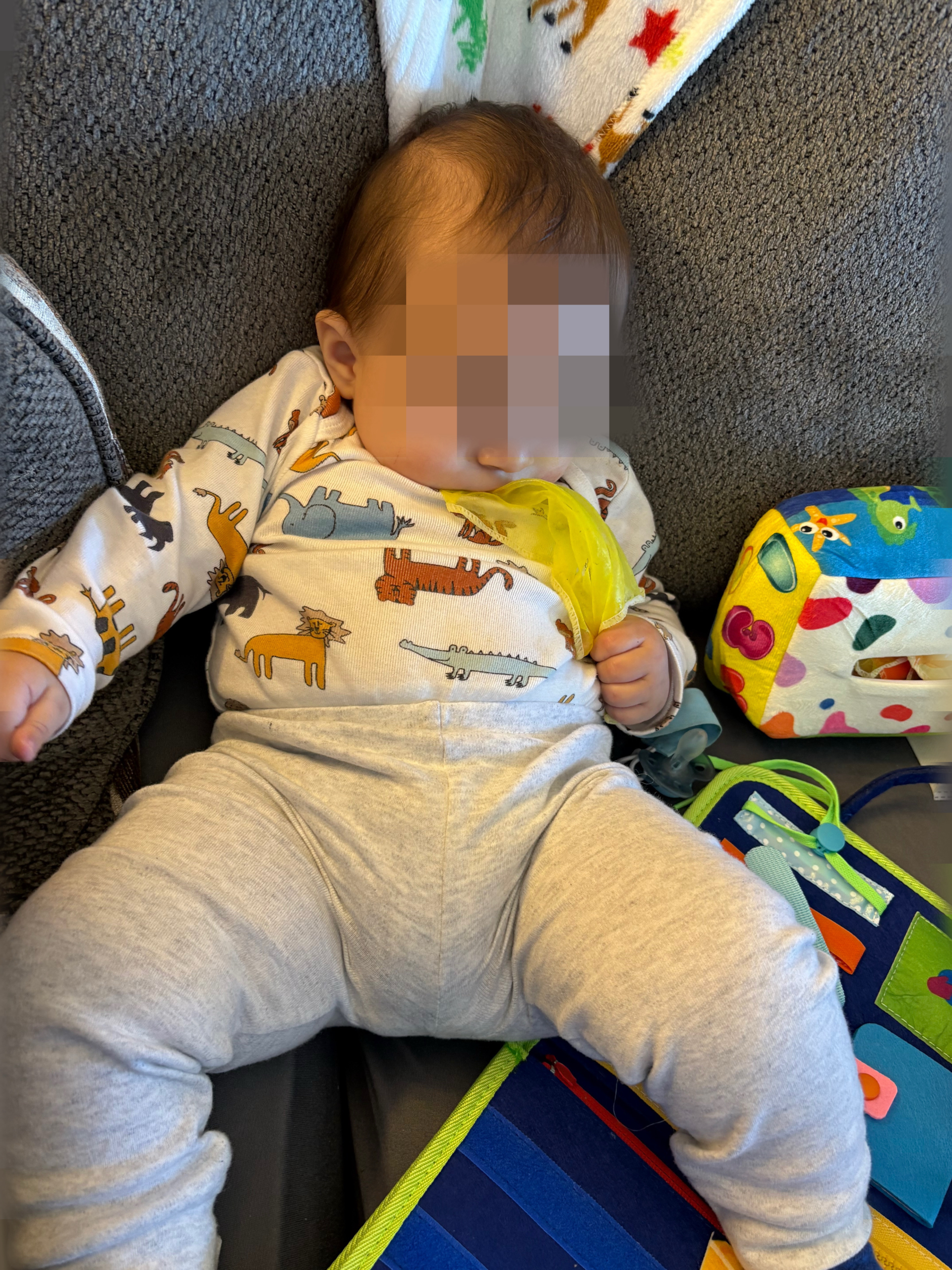


I always knew something was different- I just didn’t know what.
There wasn’t a single moment when everything clicked.
No dramatic turning point
Just a constant sense that something wasn’t lining up, even when people told me everything was fine.
And that’s the part no one really talks about.
He was a very tough baby
Jonathan cried- all the time.
This wasn’t typical fussiness or short phases.
He was hard to soothe. Hard to settle.
The crying was intense, frequent, and exhausting.
We were told it was acid reflux.
Then teething.
Then iron- deficiency anemia, which genuinely scared us.
He was seen by GI, allergy, hematology, audiology.
We did everything we were told to do.
We followed referrals.
We showed up to appointments.
We trusted medical teams.
Each explanation made sense on its own.
Each one explained the crying just enough.
So instead of stepping back, we kept trying to fix whatever was right in front of us.
I felt defeated by medical care.
This part is hard to admit.
I felt ignored.
I felt dismissed.
I felt like my concerns were constantly minimized.
It wasn’t until I finally said No- this still doesn’t feel right, that I was taken seriously.
Advocating didn’t feel empowering at first.
It felt exhausting.
It felt lonely.
Early Intervention confirmed what I already knew
At 16 months, Jonathan was evaluated through early intervention.
They identified delays in:
- Communication
- Social and emotional development
- Physical development
None of this surprised me.
It simply put professional language to what I had already been living every day.
Seeing it written down didn’t bring relief.
It made the weight heavier.
He didn’t sleep- and neither did we
Jonathan did not sleep well.
He was up every 2-3 hours, night after night, well past 12 months old.
Not a phase.
Not regression.
Just constant.
When you’re that exhausted, survival becomes the goal- not reflection or clarity.
His milestones came.. just later
Jonathan didn’t skip milestones – they came later.
- He sat at 7 months
- Crawled around 11.5 months
- Walked at 17 months
Because he eventually reached them, concerns were often brushed off.
“He’s still within range.”
“He’ll catch up.”
So I waited – even though deep down, I still knew something was different.
Things start to feel urgent
A little before Jonathan’s diagnosis, things shifted.
He began hitting himself, biting himself and banging his head.
He began showing aggression towards me and his dad.
It wasn’t constant, but it was enough to scare me.
I didn’t see it as “bad behavior.”
I saw it as communication – frustration, overwhelm, a body without tools to regulate or express his needs.
This was the point where waiting no longer felt safe.
This was when I knew we needed answers – not reassurance.
The signs people don’t like to say out loud
This part took a long time to name.
Jonathan did not consistently respond to his name.
He did not smile back easily.
He did not make eye contact the way people expect babies to
There were no dramatic red flags.
No urgency.
Just absence.
And absence is easy to explain away.
What wasn’t there yet
Jonathan did not start hand- leading until after his diagnosis.
Before that, there were very few visible attempts to communicate his needs.
Mostly quiet.
Mostly waiting.
He understood more than he could express
Joanthan understood routines, directions, and expectations.
He knew what was coming next.
He responded with actions, not words.
Because his understanding was there, it felt like speech would eventually come.
The part I struggled to explain
I knew something serious was going on because our days were so hard.
Autism crossed my mind quietly, but it never felt like the problem.
It felt like there had to be more.
Looking back now, I realize autism wasn’t the “more” –
it was the answer that finally made everything make sense.
What I wish I had known
Early signs aren’t always dramatic.
They’re often explained away.
Sometimes they look like:
- Constant crying that never really resolves
- A baby who is hard to soothe
- Chronic sleep deprivation
- Milestones that come – just later
- Escalating behaviors rooted in unmet needs
- A child who doesn’t respond, smile, or look the way people expect
- A parent who know something is different but doesn’t yet have the words
Trusting your instincts doesn’t mean you’re searching for something to be wrong.
It means you’re paying attention.
This was just the beginning of our story.
And noticing early isn’t about fear – it’s about understanding, advocacy, and giving our kids more ways to be seen.